 |

 |
The Rennes Les Chateau Parchmentsby Mark Naples from MysteryTV WebsiteThis is perhaps the aspect of the Rennes-le-Château mystery that has attracted the most interest - and the most controversy. The parchments were said to contain genealogical information relating to the survival of the Merovingian bloodline, and extracts from the Gospels in Latin that contained coded messages. It is claimed that they were acquired by a group of British businessmen - with connections to the intelligence services - and were locked away in a London bank vault until the late 1970s. This aspect of the mystery is currently the subject of a Mystery.TV documentary project. How de Sède came by them is not known for certain - he would only say that he was given them by someone closely connected with Rennes-le-Château. It has been speculated that this was either Noël Corbu or Pierre Plantard.
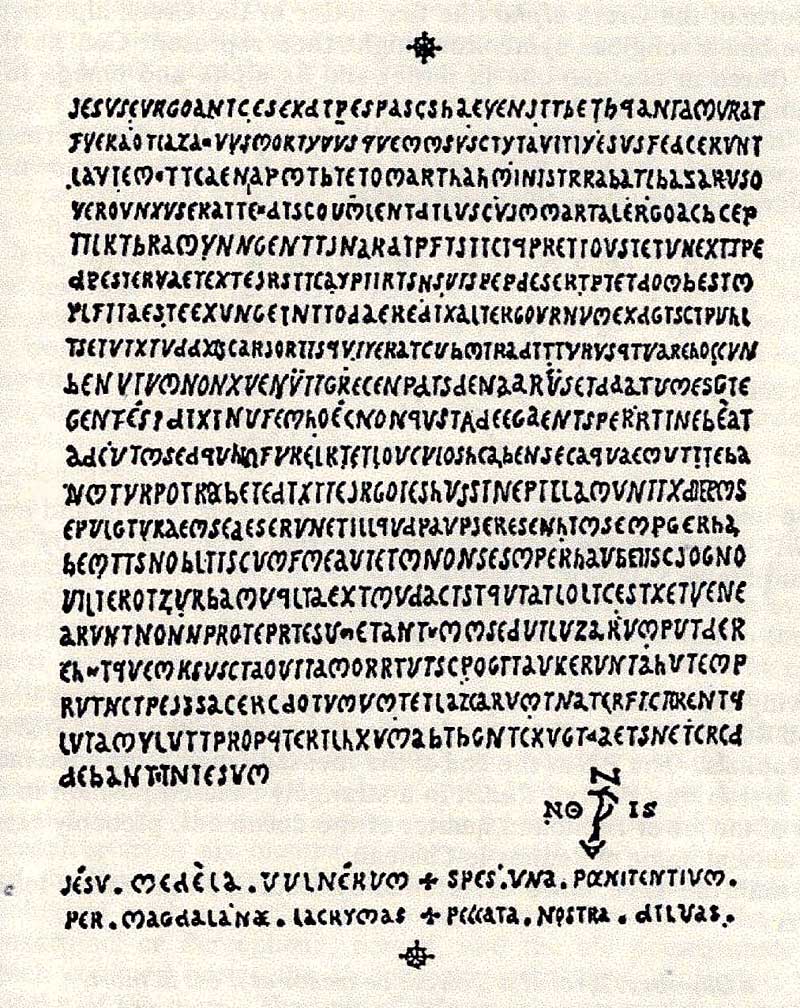
The Dagobert Parchment THE 'DAGOBERT' PARCHMENT The hidden message was discovered by Henry Lincoln in 1969. Some of the letters are raised above the rest on the line, and simply reading them in order gives the words:
In translation:
Some have read 'il est la mort' as 'it is death'. This reading is possible, but 'he is there dead' is the more obvious meaning to a French reader.
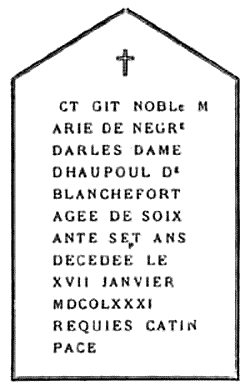
The tombstone of the Dame d'Hautpoul THE 'SHEPHERDESS' PARCHMENT
The ''Shepherdess'' Parchment
The final result of this tortuous process is the message:
This is at least readable, even if we are no wiser as to what it means. THE CODING PROCESS It requires an unnecessary number of steps, each of which is purely arbitrary, the whim of whoever devised it. For example, one of the keys to the Vigenère Square is the entire text of Dame Marie's headstone plus nine letters taken from another inscription - all of which is written backwards! Not even the most brilliant codebreaker would think to try this, let alone the use of the knight's tour and the other steps in the decoding process. In the case of the parchment message, whoever encoded it must have expected it to be found by someone who knew how to decipher it - i.e. someone who had been told what the steps in the decoding process were, and what key words and phrases are needed. This means that the coder must have communicated the decoding process to them. In which case, why didn't they send the message as well, rather than hiding it inside the altar of Rennes-le-Château church? However, if so then they must already know what those secrets are - which makes the parchment superfluous!
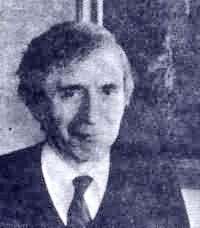
Philippe de Chérisey To compound the confusion, Philip de Chérisey, an associate of Pierre Plantard's who many believe was involved in the creation of the Dossiers secrets, later claimed that he had devised this message and the parchments in the early 1960s.
In English:
Gardent la clef is often translated as 'hold the key', but this introduces a double meaning that doesn't work in French and which could lead English-speaking researchers astray. For example, it has been suggested that it is a reference to a painting of someone holding a key. Garder means 'to guard' or 'to keep', but not literally 'to hold'.
The other references, to 'the cross', 'the horse of God', the 'guardian demon' - and especially 'blue apples' - are open to many interpretations.
A Midi Pommes Bleues (Blue Apples at Midday)
|


|
|
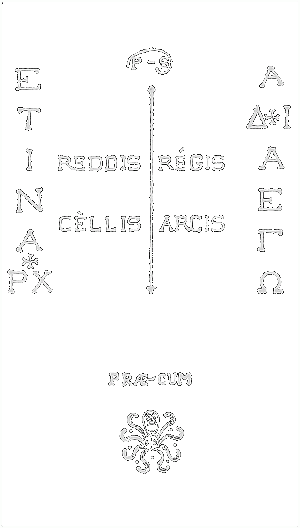
Parchment 1
The message of the second parchment also took on an enhanced meaning now that I knew what I did.
The words "Shepherdess - No Temptation; that Poussin and Teniers hold the key" are perhaps the most straightforward aspect of the message. "Shepherdess" and "Poussin", as we know, refer to Poussin's painting, The Shepherds of Arcadia.
The "key" that Poussin has embedded into this painting is the imagery of the tomb and Arcadia, coupled with the landscape that clearly matches that of Arques, near Rennes-le-Chateau, and of course, the hidden pentagram. So the painting is telling us that the sacred "Arka", the tomb of a long-lost god, is located near Arques, and within a pentagram - the mountains of Rennes-le-Chateau - and is the location of Paradise, or Arcadia.
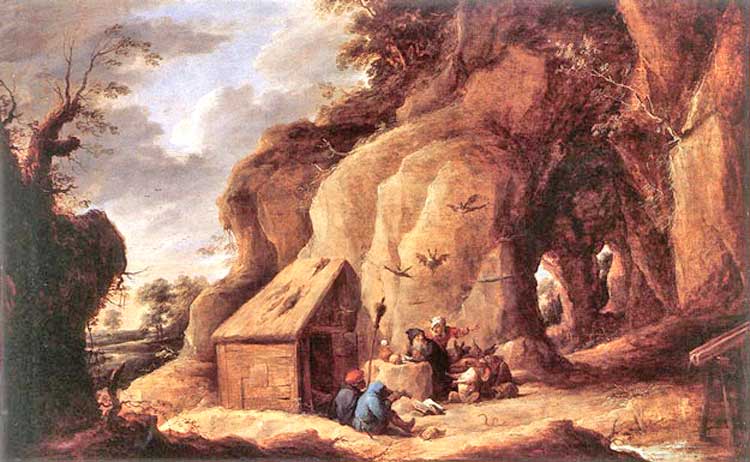
The David Teniers painting mentioned by the parchments is assumed by Henry Lincoln to be Saint Anthony and Saint Paul (click below image), the only Teniers painting featuring Saint Anthony which does not show him enduring his famous temptation by demons - thus the words "no temptation." In this painting, the two saints are sitting in front of an altar upon which stands a crucifix and a skull.
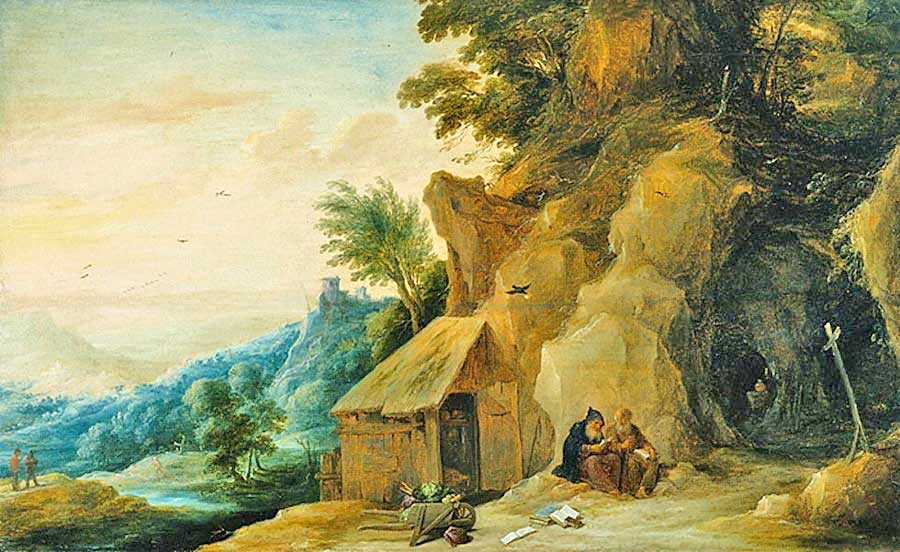
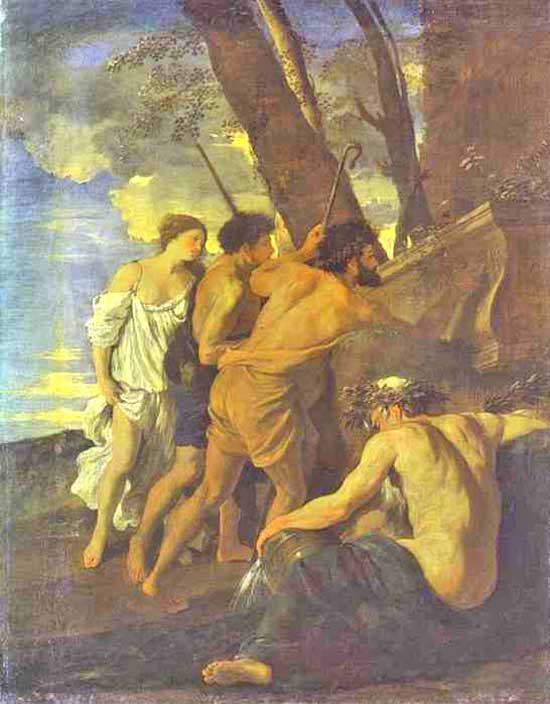
This indicates the nature of the tomb depicted in the Poussin painting.
The image of a skull and a crucifix obviously implies Golgotha, and the fact that the life-size skull dwarfs the miniature crucifix implies the giant skull of Adam after which Golgotha, the location of the Cave of Treasures, was originally named.
The painting shows one saint pointing up towards a descending dove that is carrying the holy host, a representation of the Grail stone.
|
|
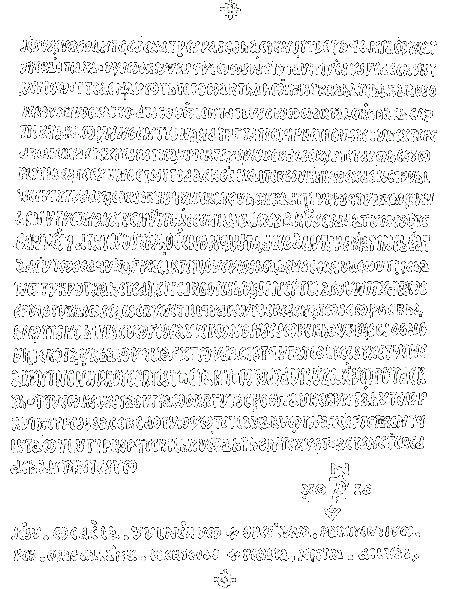
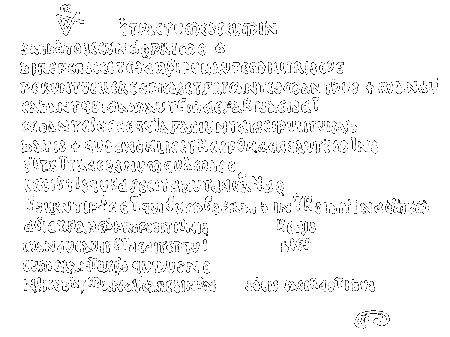
Parchment 2
What does "Pax 681" mean? I have heard an explanation of it from someone who claims inside knowledge, but since I have no confirmation of this, I will leave it unreported for now.
"By the Cross and this Horse of God" is a little less decipherable. The cross was, like the octopus, an ancient sun symbol dating back to Atlantis, and was also used to denote the pole, or center-point of the Earth. The horse was a symbol of Poseidon, or Dagon, who was thought to be an incarnation of the Sun, and the Sun was often seen by ancient man as a chariot drawn by celestial horses.
Le Serpent Rouge also makes mention of "divine horsemen of the abyss." Are we talking about the "abyss" of the celestial sea? Or the abyss of the Cave of Treasures?
Both possibilities seem likely.
"I destroy this demon guardian at midday" may tie in to the notion of the cataclysm that destroyed the Golden Age, sometimes represented as the slaying of a dragon.
Midday, as we have seen, has had ritualistic significance in the religious life of man for thousands of years, because it was when the Sun was at its highest point.
The term "blue apples" has been explained by previous authors as an idiom used locally in Southern France to refer to grapes, and therefore, its use in the parchments is a reference to the symbol of the vine, representing the bloodline of Christ. But there is perhaps another level of meaning as well. The Fall from the Garden of Eden was supposedly caused by Eve eating a forbidden fruit, usually depicted as an apple, from the Tree of Life.
Therefore, the apple symbolizes the sin that caused the Fall, and as we have said, we believe that the story of the Fall represents the same historical event as the Deluge.
The Flood was God's retribution for the sins of Cain and his descendants, who were unlawfully breeding with the "daughters of men" (or in some versions, the "daughters of Seth.") Also, according to some scholars, Seth and Abel were in fact the same person, which does indeed seem to be the case when the relevant chapters of Genesis are examined. L.A. Waddell believes that the symbol of Eve's apple is tied into this.
That is, they were unlawfully mixing their sacred, royal blood with that of commoners. So this, then, is the sin that the apple which Eve ate actually represents. And since royal blood is referred to often as "blue blood", is seems to me that the words "blue apples" are referring specifically to the sinful breeding practices that are thought to have led to the Fall/Deluge.
Other details about the parchments stick out as well. For instance, the words "Rex Mundi", meaning "King of the World", are embedded into Parchment One, indicating the Devil, or Cain. Then there are the words "Redis Bles" and "Solis Sacerdotibus" written beside the main message of Parchment One.
The way Henry Lincoln and other authors choose to interpret this, "Redis" means "Rennes", and "Bles" means "corn", which is what wheat was called in Europe and England prior to the discovery of maize, now also called "corn", in the New World. "Bles" ("corn") is also a local idiom for "money" or "treasure", like "bread" is in English.
"Solis" means "solely", and "sacerdotibus" means "initiated."
Lincoln thus reads the message as saying,
"The treasure of Rennes is only for the initiated."
But as we have established, "Redis" also means "return", and wheat ("corn") was also a symbol of Cain, who was thought to be the inventor of the plough, and the first to introduce the crop's cultivation.
In fact, Cain's name actually means "grain." Furthermore, wheat, and the bread that is made from it have been important icons in religious rituals throughout history, ranging from the Greek and Babylonian mysteries to ancient Judaism and modern Christianity.
Catholics celebrate communion by eating a wafer that represents Christ's body, and the ancient Jews had a special "shewbread" that was only administered to the Levitic caste of priests during certain rituals. "Solis" also means "Sun", and "sacerdotibus" specifically means "priesthood."
Thus, "Redis Bles Solis Sacerdotibus" could be translated in any of the following ways:
"Return the corn to the priesthood of the Sun"
"The corn of Rennes is for the priesthood of the Sun"
"The corn of Rennes is only for the priesthood" or
"Return the wheat solely to the priesthood"
We do appear to be on the right track with this interpretation, for the very text into which the code of Parchment One has been inserted is a conglomeration of quotes from three of the Gospels describing a scene in which Jesus and his disciples are walking through a cornfield, eating corn! As The Gospel of Saint Matthew describes it:
"At that time Jesus went on the sabbath day through the corn; and his disciples were an hungered, and began to pluck the ears of corn and to eat. But when the Pharisees saw it, they said unto him, Behold, thy disciples do that which is not lawful to do upon the sabbath day.
But he said to them, Have ye not read what David did, when he was an hungered, and they that were with him; How he entered into the house of God, and did eat the shewbread, which was not lawful for him to eat, neither for them which were with him, but only for the priests? Or have ye not read in the law, how that on the sabbath days the priests in the temple profane the sabbath, and are blameless?
But I say to you, that this place is one greater than the temple."
So this is the "corn" that is "only for the priesthood."
But what lies beneath the symbolism of this story, and what statement is being made by connecting it with the phrase "Redis Bles Solis Sacerdotibus"? Is the parchment's creator saying,
"Return the sacraments of the church (the true church in the tradition of Atlantis) to its rightful priests"?
And what of the last line in the passage from Matthew:
"This place is one greater than the temple"?
If its use in the parchment is a reference to Rennes-le-Chateau, this could mean that Rennes-le-Chateau is a much holier place than the remains of the temple in Jerusalem.
There may even be a message buried in the reference to King David sharing in the shewbread of the priests - a comment on the fact that Christ was seen as both priest and king, a product of the royal line of Judah and the priestly line of Levi.
This may all help explain another curious message which is buried in the text of the second parchment: "Panis ?O Sal" - the Latin words for "bread" and "salt" separated by the Alpha and Omega symbols.
Now "sal" could represent "sulfur", which characterizes one of the earliest stages of the alchemical process, while bread could represent the end result of the alchemical process, the Philosopher's Stone, just as the shewbread does in religious rituals.
But why would "Panis" ("bread") be written next to the Alpha symbol, and "Sal" ("salt") be written next to the Omega symbol, if salt is the beginning of the process and bread is the end? Perhaps, as we have theorized earlier in this book, the Alpha and Omega symbols are used by the Priory of Sion to symbolize the world before and after the Flood, or before and after the Fall from the Garden of Eden.
The bread, then, could be seen as a symbol of the Earth's fruitful generation, while the salt represents the infertility of the land experienced after the cataclysm, when the land had been inundated with saline ocean water. Perhaps, then, this is another level of meaning to the abbreviation "P.S." - "Panis Sal."
There is yet another hidden message embedded in Parchment Two as well:
"Areth Adgenes."
Henry Lincoln has chosen to recombine these words into "Ad Genesareth", meaning "Towards Genesareth", the latter being a town on the coast of the Sea of Galilee (an inland lake where many New Testament stories took place).
Indeed, the Sea of Galilee is sometimes called "Lake Genesareth."
But since the words were split up in the parchment in a particular way, it seems to us that were meant to look at the meaning of the individual syllables. "Genes" could be short for "Genesis", while "Areth" could be taken to mean "Ararat." The word "genesis" means "beginning" or "generation." "Ararat" means "high holy place", and of course indicates the mount upon which Noah was saved from the Flood.
So we could recombine the phrase to say "Ad Genes Areth", which would basically mean,
"Towards the high holy place where civilization was begun, and ultimately saved from annihilation."
The code of Parchment Two is made using a passage from The Gospel of Saint John, Chapter 12, verses 1-7. Shortly after Christ raises Lazarus from the dead, he is having dinner with Mary of Bethany (thought by some to be the same as Magdalen), Martha, Lazarus, and his disciples.
Mary takes "a pound of ointment of spikenard, very costly", and anoints Christ's feet with it, "wiping his feet with her hair."
Judas Iscariot, disgusted at the waste of something so valuable, remarks,
"Why was not this ointment sold for three hundred pence, and given to the poor?"
The passage continues:
"This he said, not that he cared for the poor; but because he was a thief, and had the bag, and bare what was put therein. Then said Jesus, Let her alone; against the day of my burial hath she kept this. For the poor always ye have with you; but me ye not have always."
The scene this passage describes is also illustrated in a stained glass window on the ceiling behind the altar of Sauniere's church. What could its significance be in this context?
The anointing of Christ's feet by Mary has been described by some authors as the ritual anointing of a king by his bride and queen, which we find perfectly reasonable. But Jesus specifically says that, "against the day of my burial hath she kept this", indicating that it was meant to anoint his dead body before it was placed in the tomb.
Was this tomb in Rennes-le-Chateau?
Endnote
(1) The letters "SI", in this instance could actually mean "IS", or Isis, while "ON" is another name the Egyptians used for Osiris.