|

 |
Skara Brae: The Raven and the DoveThe Dove and the Crow - from Aesop"A Dove shut up in a cage was boasting of the large number of young ones which she had hatched. A Crow hearing her, said: "My good friend, cease from this unseasonable boasting. The larger the number of your family, the greater your cause of sorrow, in seeing them shut up in this prison-house." Skara BraeSkara Brae /ˈskærə ˈbreɪ/ is a stone-built Neolithic settlement, located on the Bay of Skaill on the west coast of Mainland, the largest island in the Orkney archipelago of Scotland. It consisted of ten clustered houses, made of flagstones, in earthen dams that provided support for the walls; the houses included stone hearths, beds, and cupboards. A primitive sewer system, with "toilets" and drains in each house, included water used to flush waste into a drain and out to the ocean. The site was occupied from roughly 3180 BC to about 2500 BC and is Europe's most complete Neolithic village. Skara Brae gained UNESCO World Heritage Site status as one of four sites making up "The Heart of Neolithic Orkney". Older than Stonehenge and the Great Pyramids of Giza, it has been called the "Scottish Pompeii" because of its excellent preservation. The name 'Skara Brae' means Mound or Hill (brae) of the Sea Raven (Skara), also known as a Cormorant. The "Eagle" of Saint John - A Wolf in Sheep's Clothing, or a Tacit Raven?According to Wikipedia, "The Eagle of Saint John (Spanish: Águila de San Juan) is a heraldic eagle associated mostly with the Catholic Monarchs which was later used during Francoist Spain (1939–77) and the Spanish transition to democracy (1977–81). It is sable with an or halo and feet of gules."
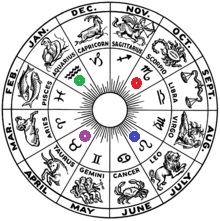
Noah and the Raven and the DoveGenesis 8:6-12 After forty days Noah opened a window he had made in the ark and sent out a raven, and it kept flying back and forth until the water had dried up from the earth. Then he sent out a dove to see if the water had receded from the surface of the ground. But the dove could find nowhere to perch because there was water over all the surface of the earth; so it returned to Noah in the ark. He reached out his hand and took the dove and brought it back to himself in the ark. He waited seven more days and again sent out the dove from the ark. When the dove returned to him in the evening, there in its beak was a freshly plucked olive leaf! Then Noah knew that the water had receded from the earth. He waited seven more days and sent the dove out again, but this time it did not return to him. The above is obviously an allusion to two tribes - or paths - taken. Note that both birds kept coming back until the waters had dried up: the significance is that the raven - being more independent - found its own way earlier, and that the dove brought back an olive branch before not returning. The flood being an allegory for upheaval, the ark being the means of salvation which Noah realized was going to be needed. Forty days indicates a long time - much like wandering in the desert for forty years. Coming back and forth before being established reflects a young adult returning to their parents' house. Scorpio (Eagle) and Skara (Raven)... "lost at sea", but able to crawl on matter nonetheless? The Ox, eagle, lion and man: Why are the Evangelists associated with these creatures?The Ox = The Bull = Taurus: Mark (Mark of the Beast) The Eagle = the ancient symbol for Scorpio: John - Pontius Pilate, slayer of Orion The Lion = Leo: Matthew ( The Man = Aquarius: Luke (Lucius - bringer of light) Orion
♍︎︎ Virgo up and down and then culminating in a fish (Piscean) symbol ♏︎︎ Scorpio up and down and then culminating in movement along a lower direction
|
 Coat of arms of the Catholic Monarchs.
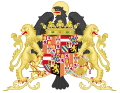 The Eagle of Saint John and two lions, in an ornamented version of the coat of arms of Joanna I of Castile.
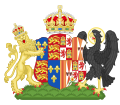 The Eagle of Saint John in the coat of arms of Catherine of Aragon, Queen of England.
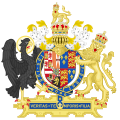 The Eagle of Saint John in the coat of arms of Mary I of England after her marriage with Philip II.
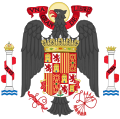 Coat of arms of Spain from 1945 to 1977.
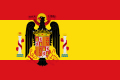 Flag of Spain from 1945 to 1977.
 Coat of arms of Lima.
 Coat of arms of Valparaíso.
 Coat of arms of the Boyacá Department.
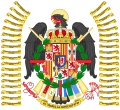 Coat of arms of the Regimiento de Infantería "Isabel la Católica" n.º 29 (Spanish Army).
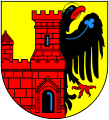 Coat of arms of Haapsalu, Estonia.
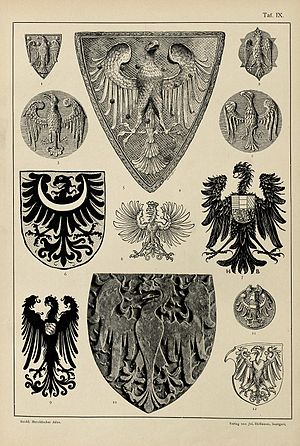 Examples of heraldic eagles of the 13th to 16th centuries, from Hugo Gerard Ströhl's Heraldischer Atlas
 Or two eagles sable armed gules for Homberg (Zürich armorial, c. 1340). At this time, the black-on-gold eagle could still be used for a family of the lower nobility without association to the imperial eagle
 Royal coat of arms for Frederick IV of Germany (1446)
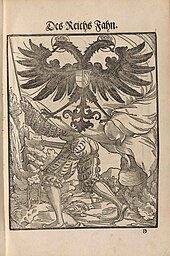 Imperial banner for Charles V (Jakob Kallenberg 1545)
 Coat of arms of Silesia and of the present Lower Silesian Voivodeship, with Brustspange (crescent-shaped przepaska)
 Eagle decapitate (without head), coat of arms of German nobility von der Hoven, alias: "Pampus".
 Reconstruction of the 14th-century royal flag (Königsfahne), with a single-headed eagle, the predecessor of the 15th-century imperial flag with the double-headed imperial eagle
 Silesian eagle
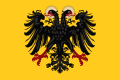 Imperial Banner of the Holy Roman Empire, modern re-creation
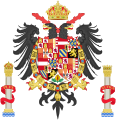 Greater coat of arms of Charles V, Holy Roman Emperor and King of Spain
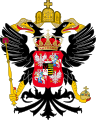 Coat of arms of Frederick Augustus II, Elector of Saxony
 Coat of arms of the Austrian Empire (1815–1867)
 Coat of arms of the Federal State of Austria (1934–1938)
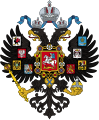 Coat of arms of the Russian Empire
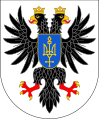 Coat of arms of Chernihiv Oblast, Ukraine (2000–)
 Achievement of Arms of Austria-Hungary from 1915 until 1918
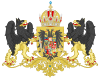 Austria's medium coat of arms 1915-1918
 Great Seal of the United States